

Food processing facilities often have wet floors, grease residues, and other potential hazards. Workers also need to stand or walk for long periods. Therefore, choosing the right work shoes or safety shoes is essential not only for employee safety and comfort but also for maintaining proper hygiene in the workplace.
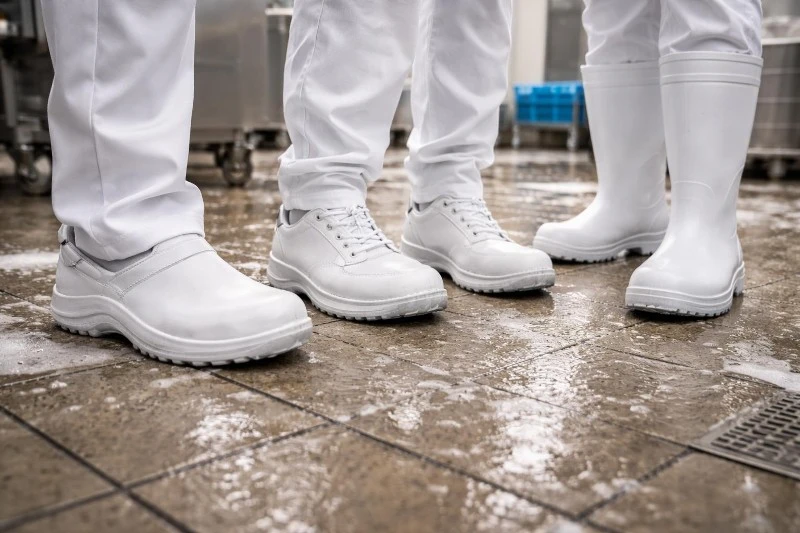
So, how should food processing companies choose suitable safety shoes?
Prioritize Slip Resistance
In food processing facilities, water, grease, meat residues, and cleaning agents can make floors slippery and increase the risk of slips and falls. Therefore, slip resistance should be one of the first factors to consider when selecting footwear.
Choose appropriate outsole materials and tread patterns based on the actual working environment. Rubber outsoles and certain polyurethane (PU) outsoles can meet different workplace needs, but their performance depends on the material formulation, tread design, and floor conditions.
The outsole pattern should help channel liquids away from the contact surface while minimizing the accumulation of food residues. In meat processing, seafood handling, and food cleaning areas, particular attention should be paid to slip resistance and oil resistance.
Choose Upper Materials Based on the Working Environment
Food processing facilities generally require footwear that is easy to clean, durable, and suitable for the specific working environment.
For areas where workers frequently come into contact with water and cleaning agents, rubber or other materials suitable for direct washing may be a good choice. Leather and synthetic uppers can also be considered if they provide adequate water and oil resistance for the intended application.
The upper design should minimize hard-to-clean gaps and areas where dirt can accumulate, making routine cleaning and disinfection easier. It is also important to confirm that the materials can withstand the cleaning agents used in the facility to prevent premature cracking, hardening, or other damage.
Is Waterproof Footwear Necessary?
Different food processing areas have different footwear requirements.
In packaging, sorting, and dry processing areas, work shoes with good breathability and easy-to-clean surfaces may be more suitable. In meat processing, seafood handling, dairy production, and areas requiring frequent washdowns, waterproof performance should be a key consideration.
For workplaces with prolonged exposure to large amounts of water, suitable waterproof work boots or safety boots may be necessary. However, water-repellent footwear, shoes with waterproof uppers, and fully waterproof footwear are not the same. Buyers should verify the actual waterproof performance of the product before purchasing.
If employees work in cold storage facilities, insulation should also be considered to ensure that the footwear provides adequate protection against low temperatures.
Determine Whether Toe Protection Is Required
Not every food processing job requires the same type of safety footwear. Businesses should select the appropriate level of protection based on an assessment of workplace hazards.
If employees handle raw material containers, operate machinery, or work around objects that could fall onto their feet, safety shoes with protective toe caps are recommended. Depending on the specific requirements, steel toe caps or composite toe caps can be selected.
If there is a risk of sharp objects penetrating the outsole, footwear with a puncture-resistant midsole should also be considered. For general sorting or packaging tasks, occupational work shoes that meet the relevant requirements may be sufficient, depending on the risk assessment.
For the European market, businesses can refer to the EN ISO 20345 safety footwear standard. During procurement, buyers should check product markings, certification documents, and test reports to ensure that the footwear meets the applicable requirements of the target market and the intended workplace.
Comfort Is Equally Important
Food processing workers often spend long hours standing and walking. Shoes that are too heavy, too stiff, or incorrectly sized can cause foot fatigue and reduce overall comfort at work.
When selecting footwear, consider its weight, toe box space, cushioning, breathability, and overall fit. Shoes should provide enough room for the toes without squeezing them, but they should not be so loose that the feet slide around inside during walking.
For cold storage workers, a balance between warmth and comfort is essential. For jobs involving high temperatures, humid conditions, or prolonged standing, footwear should be selected according to the specific working environment.
Pay Attention to Cleaning, Disinfection, and Routine Maintenance
Food processing companies need more than suitable footwear. They should also establish effective footwear hygiene and maintenance procedures.
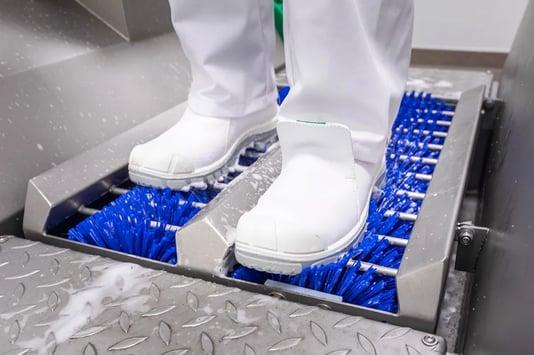
It is recommended to designate specific work shoes or boots for different hygiene zones to prevent employees from wearing outdoor footwear directly into production areas. Footwear that requires cleaning and disinfection should be treated according to the facility's established procedures, and its materials must be compatible with the cleaning products being used.
Regular inspections are also important. Check for worn outsole treads, damaged uppers, and deteriorated protective components. Footwear should be replaced promptly when the outsole is significantly worn or the shoe structure is damaged, as these issues can compromise slip resistance and protective performance.
Conclusion
Choosing safety shoes for food processing facilities involves more than comparing prices or appearance. Businesses should consider slip resistance, material selection, ease of cleaning, waterproof performance, protection levels, and wearing comfort.
For food processing companies and safety footwear buyers, the best approach is to identify workplace hazards and hygiene requirements first, then evaluate suitable products based on relevant standards, test reports, and practical wear trials.
If you are sourcing safety shoes for food processing, meat handling, seafood production, or food packaging facilities, consider providing a professional manufacturer with details about the working environment, floor conditions, and required protection levels. This will help you identify the most suitable footwear solutions for your specific application.


