

In modern industrial production, safety shoes have become an essential type of Personal Protective Equipment (PPE). Designed to protect workers' feet, safety shoes provide protection against impact and puncture hazards. Depending on different working environments, they can also be equipped with additional functions such as slip resistance, anti-static protection, oil resistance, and more.
This leads many people to ask: When were safety shoes invented?
The development of safety shoes is closely connected with the history of industrialization. They did not appear overnight. Instead, they evolved gradually through the combined influence of industrial demands, advances in material technology, and the increasing awareness of workplace safety.

1. The Origin of Safety Shoes: Early Protective Footwear During the Industrial Revolution
The earliest forms of safety shoes can be traced back to the 19th century Industrial Revolution (around the 1800s).
From the late 18th century to the 19th century, Europe and the United States experienced rapid industrial growth. Large numbers of factories, mines, railways, and construction projects were established. Workers were required to operate heavy machinery, handle materials, and perform physically demanding tasks every day.
At that time, most workers only wore ordinary shoes while working. These shoes offered little protection against industrial hazards such as falling heavy objects, sharp metal fragments, or dangerous working conditions.
To reduce workplace injuries, some factories began requiring workers to wear stronger and more durable leather boots. In some European workplaces, workers started adding metal reinforcement materials around the toe area to improve protection.
Although these early protective boots had a simple structure, they represented the basic concept behind modern safety shoes - strengthening footwear construction to protect workers' feet from injuries.
2. The Development of Steel Toe Safety Shoes
The modern concept of safety shoes began to take shape in the early 20th century.
With the rapid development of industries such as automobile manufacturing, mechanical production, construction, and mining, workplace risks increased significantly. Traditional leather boots were no longer enough to meet safety requirements, creating the need for more professional protective footwear.
During World War I and World War II, the demand for protective footwear increased further due to military operations and large-scale industrial production. This period accelerated the development of safety shoe technology.
One of the most important innovations was the introduction of the steel toe cap.
A steel toe cap is a protective steel shell placed inside the front part of the shoe to prevent serious toe injuries caused by falling objects or heavy impacts. By the early 20th century, steel toe boots became widely used in industries such as coal mining, steel manufacturing, construction, and transportation.
This innovation marked an important milestone in the history of safety footwear, transforming ordinary work boots into professional protective equipment.
3. The Establishment of Safety Shoe Standards in the Mid and Late 20th Century
As industrial production expanded worldwide, governments and organizations realized that workplace footwear safety could not rely only on individual company designs. Unified testing standards were needed to ensure reliable protection.
During the mid and late 20th century, many countries began developing safety footwear standards.
In Europe, the EN ISO 20345 safety footwear standard system was established, defining clear requirements for protective performance, including impact resistance, compression resistance, and slip resistance.
In the United States, organizations such as ASTM International developed safety footwear standards to regulate the testing and performance requirements of industrial protective shoes.
These standards helped safety shoes evolve from simply "strong work boots" into scientifically tested and certified professional protective equipment.

4. Modern Safety Shoes: From Protection to Comfort
Entering the 21st century, the development direction of safety shoes has changed significantly.
Traditional safety shoes provided excellent protection but also had some disadvantages, including heavy weight, limited breathability, bulky appearance, and reduced comfort during long working hours.
With advances in sports footwear technology, modern safety shoes have started combining industrial protection with athletic shoe design concepts.
Today's safety shoes focus on several key areas:
1. Lightweight Design
Traditional steel toe safety shoes are often heavier due to their metal components. Modern safety footwear increasingly uses advanced lightweight materials, including:
Composite toe caps
Fiberglass toe caps
Kevlar puncture-resistant midsoles
These materials provide strong protection while significantly reducing overall shoe weight and improving wearing comfort.
2. Sport-Inspired Appearance
Modern safety shoes are no longer limited to traditional heavy work boots.
Many new designs use materials commonly found in athletic footwear, such as:
Knitted uppers
Breathable mesh fabrics
Lightweight EVA outsoles
Comfortable ergonomic insoles
As a result, modern safety shoes look more like casual sports shoes, allowing workers to enjoy both protection and comfort during work and daily activities.
Conclusion
From simple reinforced leather boots to today's advanced protective footwear, the evolution of safety shoes has always focused on one core goal: protecting workers' feet while improving comfort and workplace safety.
With continuous advances in industrial technology and material science, future safety shoes will become even lighter, smarter, more environmentally friendly, and better adapted to modern working environments.
Safety footwear is no longer just protective equipment - it is becoming a combination of safety, technology, comfort, and modern design.
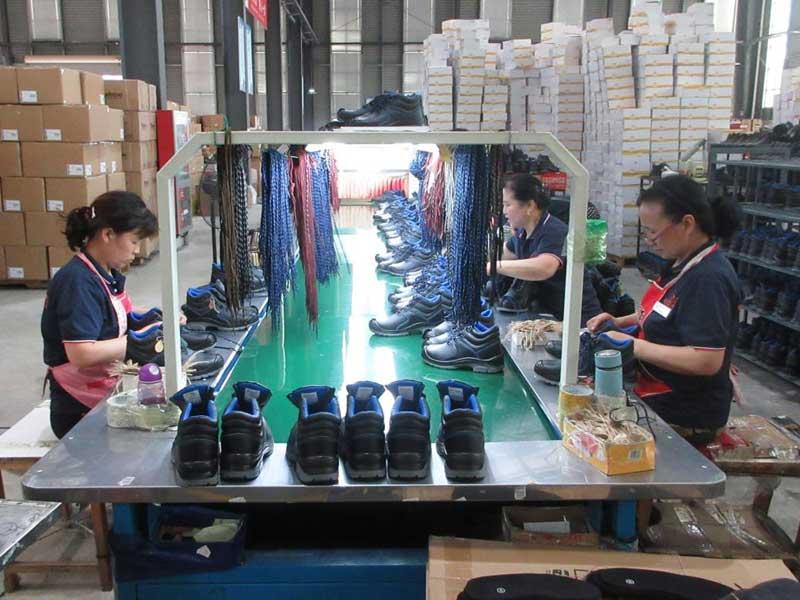
As a professional China footwear manufacturer factory, Zstep continues to innovate by combining safety technology, modern design, and manufacturing expertise to provide reliable footwear solutions for workers around the world.


