

For many workers, a typical workday means spending eight, ten, or even twelve hours on their feet. Whether you're working in construction, manufacturing, logistics, warehousing, agriculture, or maintenance, physical discomfort can quickly affect productivity, concentration, and overall job satisfaction.
This is why more professionals are asking the same question: How To Make Job Comfortable And Breathable?
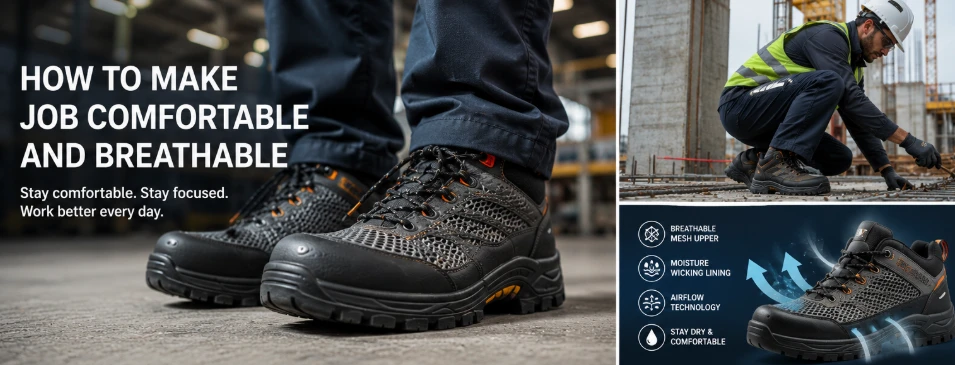
The answer is not limited to workplace ergonomics or break schedules. One of the most important factors is often overlooked-what you wear on your feet.
A well-designed pair of breathable safety shoes can make a significant difference in how you feel at the end of the day. Comfortable footwear helps reduce fatigue, improves mobility, and creates a healthier environment for your feet. In this article, we'll explore practical ways to make your job more comfortable and breathable while explaining why footwear plays such an important role in workplace performance.
Why Comfort Matters More Than Ever
Workplaces of the modern world are transforming. The employees are supposed to work at a rapid pace, remain productive over a long period, execute several roles in a working day. Therefore, physical comfort is now more relevant than ever before.
Much of the population believes that the pain in their feet is just a work-related issue. Nevertheless, research and on-the-job experience have all shown that sore feet are often associated with fatigue in the legs, knees, hips and lower back. The long-term accumulation of discomfort decreases the level of attention and increases the risk of errors.
A good working atmosphere begins at the bottom layer. All of your body is affected when your feet are feeling supported.
One of the major causes of this trend is that both employers and employees are now more concerned with the choice of footwear, not just as a mere compliance issue, but as one of the most important factors in their job.
The Hidden Impact of Heat and Moisture
One of the biggest challenges workers face is excessive heat inside their footwear.
When working in long hours, feet will tend to produce heat and perspiration. The absence of adequate ventilation causes moisture to remain within the shoes. It is a very uneasy condition that may cause irritation, smell, blisters and even skin infection.
These problems are experienced by workers in warm climates throughout the year, but the indoor work environment can also produce the same situation. Employees are commonly exposed to increased temperature in warehouses, factories and other production sites.
Learning How To Make Job Comfortable And Breathable is learning the significance of the flow of air. Footwear with the ability to permit heat and moisture to leave are capable of sustaining a more hygienic atmosphere in the foot and enhancing general comfort during the day.

Choosing Breathable Safety Footwear
Not all safety shoes are built the same.
Conventional working shoes were usually created with durability in mind as their main goal. Although protection is still very important, contemporary safety shoe makers have realized that comfort and breathability are also essential.
Upper materials are very important in defining what a shoe feels like when it is worn. High-tech meshes, designed textiles and light-weight synthetic materials permit air to flow more freely as compared to older and heavier materials.
Most safety shoes that can be found today are a combination of breathable uppers and protective toe caps and puncture-resistant midsoles providing the most protection and comfort to working people.
Shoes must not be a weight on your feet. The ideal safety shoes will give you safety and still be light enough to allow you to move naturally.
Cushioning and Support Make a Difference
Breathability alone is not enough.
A shoe with good ventilation may also feel uncomfortable in case it has no sufficient support. Each step causes pressure on the feet, particularly after working for extended periods.
Good quality safety shoes frequently have midsoles that absorb shocks as well as ergonomic insoles that are intended to spread the pressure out. These functions can alleviate the load placed on the heels, arches and forefoot.
Especially those workers who are mostly on their feet during the day will be able to feel the difference. Correct cushioning will help decrease the level of fatigue as well as enhance comfort during an entire shift.

Small Habits That Improve Daily Comfort
While footwear is important, several daily habits can also help improve comfort at work.
The use of moisture-wicking socks can make sweating less severe and provide better air circulation in the shoes. Performance fiber technical work socks tend to be more successful compared to regular work socks that are made out of cotton.
Also, switching between several pairs of safety shoes may be useful. The fact that footwear is allowed to air-dry in between the usage prevents the accumulation of moisture and increases the longevity of the shoes.
The other easy but successful practice is regular cleaning. Dust, dirt, and other contaminants at work can clog the ventilation zones and decrease the general breathability in the long run.
Although these little things might appear insignificant, all of them add up to make work life more comfortable.
If you're wondering to make job comfortable and breathable, the answer starts with understanding the role that footwear plays in your daily work experience.
A comfortable and breathable pair of safety shoes can help regulate temperature, reduce fatigue, improve support, and create a healthier environment for your feet. Combined with proper fit, quality socks, and regular maintenance, the right footwear can transform how you feel throughout the workday.


