

When choosing safety shoes, most buyers focus on the toe cap, upper material, and safety standards. However, the outsole is equally important. It directly affects comfort, slip resistance, durability, and overall footwear performance.
PU, TPU, and rubber are three commonly used outsole materials in safety footwear. Each has different properties, making it suitable for specific working environments.
So, which outsole is the best for your safety shoes? In this guide, we will compare PU vs TPU vs rubber outsoles and help you make a more informed purchasing decision.
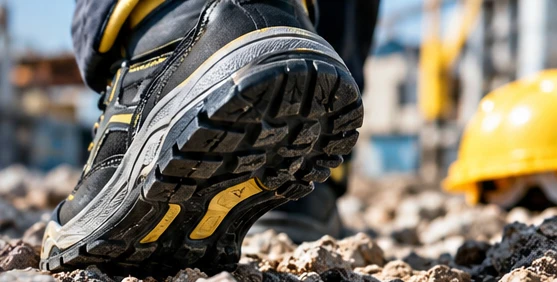
Why Is the Outsole Important in Safety Shoes?
The outsole is the bottom part of a shoe that comes into contact with the ground. It supports the wearer during walking, standing, and working on different surfaces.
A well-designed safety shoe outsole should provide:
Good slip resistance
Sufficient wear resistance
Comfortable walking support
Reliable ground contact
Suitable resistance to workplace hazards
Different workplaces have different requirements. For example, warehouse workers may prioritize lightweight and comfortable shoes, while construction workers may need stronger abrasion resistance and reliable traction.
The best outsole depends on the working environment, shoe design, and required performance-not simply the material name.
PU vs TPU vs Rubber Outsoles
1. PU Outsole: Lightweight and Comfortable
PU stands for Polyurethane. It is widely used in safety shoes because of its lightweight construction, flexibility, and cost-effectiveness.
PU outsoles are often used in work shoes designed for warehouses, factories, logistics, and general industrial applications.
Key Advantages of PU Outsoles:
- Lightweight Construction
PU is generally lighter than many rubber outsole designs. Lightweight shoes can help reduce foot fatigue during long working hours.
- Comfortable Walking Experience
PU can provide cushioning and flexibility, depending on its formulation and outsole structure. This makes it suitable for workers who spend much of their day standing or walking.
- Cost-Effective
PU safety shoes can offer a practical balance between price and performance, making them attractive to wholesalers, distributors, and industrial footwear brands.
- Flexible Design Options
PU can be produced in different densities and structures, allowing manufacturers to develop a range of safety shoe designs.
Recommended Applications
Warehouses
Indoor factories
Logistics operations
General work environments
Light industrial applications
However, PU performance varies by formulation and construction. Some PU outsoles may have limitations in high-temperature environments, hydrolysis-prone conditions, or demanding chemical exposure. The specific material and test results should always be considered.
2. TPU Outsole: Durability and Performance
TPU stands for Thermoplastic Polyurethane. It is valued for its combination of flexibility, abrasion resistance, and mechanical strength.
Compared with conventional PU designs, TPU can offer advantages in applications where outsole durability and resistance to wear are important.
Key Advantages of TPU Outsoles:
- Good Abrasion Resistance
TPU formulations can provide strong resistance to surface wear, making them suitable for demanding working conditions.
- Flexibility
TPU can maintain flexibility across a range of temperatures, although its low-temperature performance depends on the specific formulation.
- Design Versatility
TPU can be molded into different tread patterns and outsole structures, allowing manufacturers to create performance-oriented footwear.
- Potential Chemical Resistance
Certain TPU formulations offer resistance to oils and chemicals. Performance depends on the specific chemical, concentration, temperature, and exposure time.
Recommended Applications
Outdoor work
Construction
Industrial environments
Logistics and transportation
Workplaces requiring enhanced abrasion resistance
For buyers who want to upgrade from a standard PU outsole, PU/TPU safety shoes may offer a useful balance of comfort and durability. However, the actual improvement depends on the formulation and construction of the shoe.
3. Rubber Outsole: Grip and Toughness
Rubber is a traditional outsole material known for its durability, traction, and resistance to many demanding conditions.
Rubber safety shoe outsoles are commonly used in construction, heavy industry, outdoor work, and environments where heat or surface traction is a key consideration.
Key Advantages of Rubber Outsoles
- Excellent Traction Potential
Rubber compounds can provide strong grip when combined with a suitable tread design. Slip resistance must be verified through appropriate testing.
- Good Wear Resistance
Many rubber compounds offer strong abrasion resistance, making them suitable for demanding work environments.
- Heat Resistance Options
Specialized rubber compounds can provide improved resistance to elevated temperatures. Not all rubber outsoles have the same heat performance, so the manufacturer's specifications are important.
- Durable Construction
Rubber outsoles can be suitable for rough surfaces and repeated outdoor use, depending on their formulation and design.
Recommended Applications
Construction sites
Outdoor work
Heavy industrial applications
Certain high-temperature environments
Workplaces requiring strong traction
Rubber may be heavier than some PU designs. Therefore, buyers should consider the balance between protection, comfort, weight, and price.
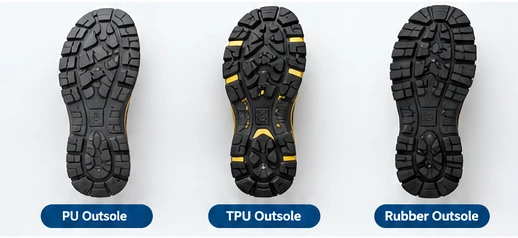
PU vs TPU vs Rubber: Quick Comparison
| Feature | PU Outsole | TPU Outsole | Rubber Outsole |
|---|---|---|---|
| Weight | Generally lightweight | Light to medium, depending on design | Often heavier |
| Comfort | Good potential | Good potential | Depends on construction |
| Flexibility | Good | Good to very good | Depends on compound |
| Abrasion resistance | Formulation-dependent | Often strong | Often strong |
| Slip resistance | Depends on tread and compound | Depends on tread and compound | Depends on tread and compound |
| Heat resistance | Depends on formulation | Depends on formulation | Specialized compounds available |
| Chemical resistance | Depends on formulation | Depends on formulation | Depends on formulation |
| Typical applications | Indoor and general work | Industrial and outdoor work | Demanding and outdoor work |
Important: This comparison is a general material overview. Actual outsole performance depends on the formulation, hardness, tread pattern, bonding, and testing method.
Which Outsole Should You Choose?
There is no single outsole material that is ideal for every workplace. Buyers should evaluate several factors before selecting safety footwear.
- Choose PU When You Prioritize Lightweight Comfort
PU is worth considering when your customers need affordable safety shoes for indoor work, warehouses, and general industrial environments.
It can be a practical choice for products designed around everyday comfort and competitive pricing.
-
Choose TPU When You Need a Balance of Performance
TPU may be suitable when durability, flexibility, and outsole design versatility are important.
It can be considered for industrial safety shoes and products where buyers want a performance-oriented alternative to conventional PU.
-
Choose Rubber When Traction and Toughness Matter
Rubber may be a suitable option for demanding outdoor applications and environments where the outsole's abrasion, heat, or traction performance is important.
However, the final selection should be based on the specific compound and applicable test requirements.


